Tenses in English Grammar – Types, Uses and Examples
Tense is the category that expresses time reference by changing the form of a verb to indicate when an action or state occurs. It serves as the linguistic timeline that distinguishes whether an event happened in the Past, is happening in the Present, or will happen in the Future.
- A Tense is a form taken by a verb to indicate the time of action.
- A Tense is a form taken by a verb to indicate the duration of action.
 Types of Tenses
- PAST TENSE- used to express things that have already happened in the past
- PRESENT TENSE- used to express things that are happening right now in the present
- FUTURE TENSE- used to express things that have yet to happen in the future
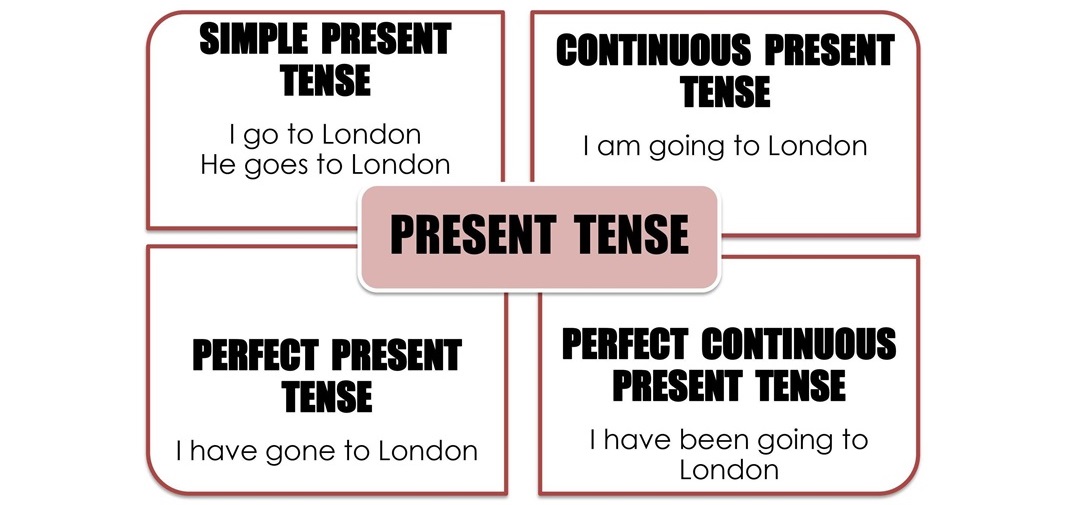
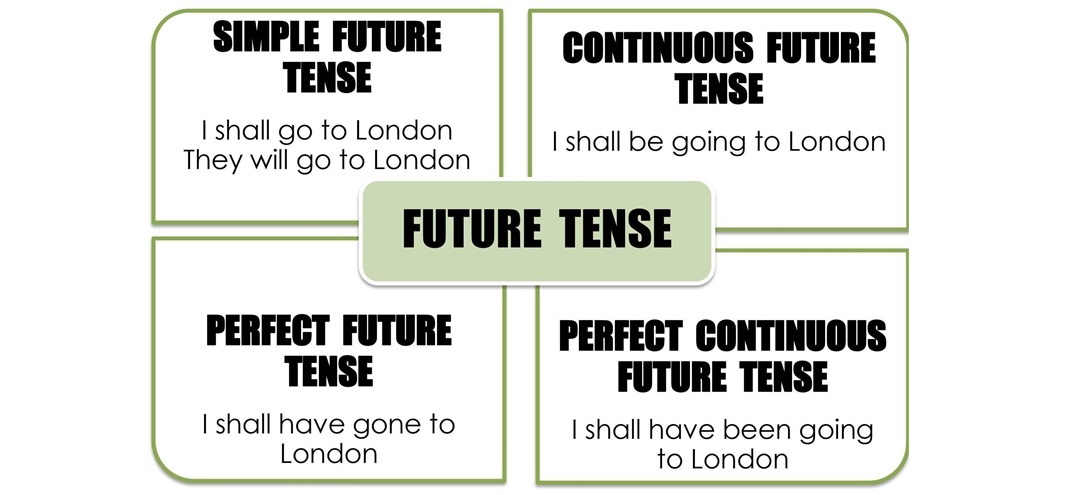
Four Forms of Tenses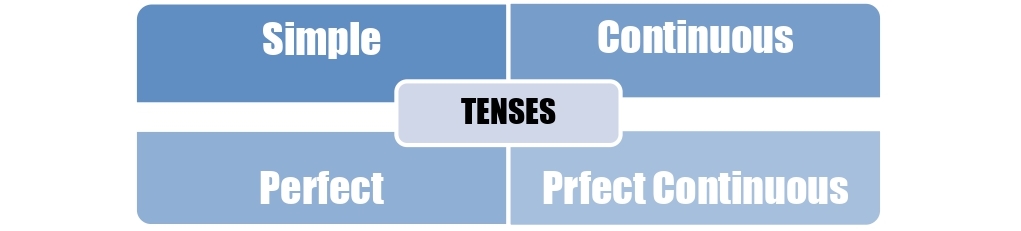
12 Basic English Tenses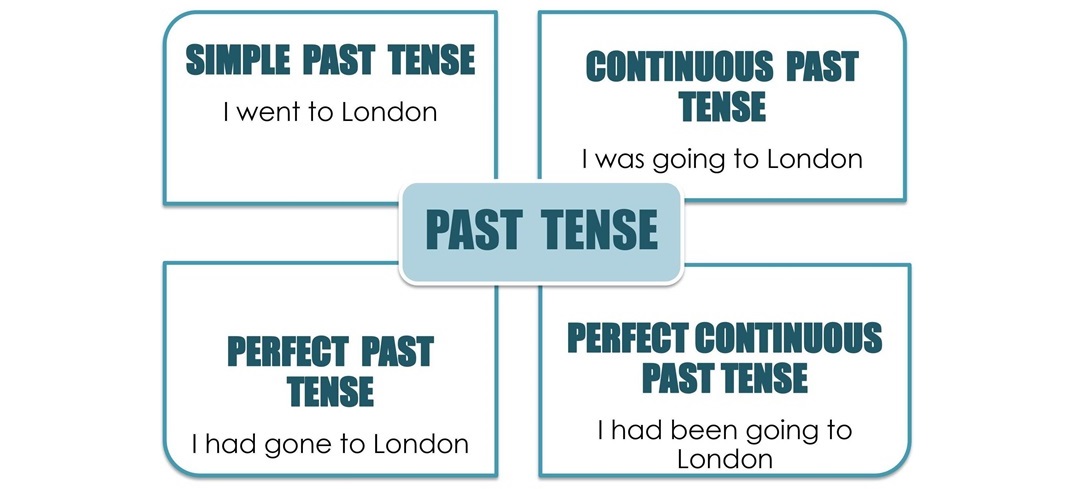
1. Uses of Simple Past Tense
[sub+main verb (past)]
a. TO EXPRESS FINISHED ACTION
- We saw a movie yesterday.
- We traveled to Australia last year.
- John played very well today.
- Julie finished writing a storybook.
- My father died in 2015.
b. TO EXPRESS PAST DURATION
- We lived in Jerusalem for two weeks.
- Smith played football all day.
- I studied French for two years.
- Last year, my daughter joined an IT Company.
- They talked on the phone for one hour.
c. IN NEGATIVE SENTENCES
- We didn’t study grammar yesterday.
- You didn’t respect your teacher.
- My mother didn’t go to Paris.
- They did not invite me to the ceremony.
- You did not watch a movie.
d. IN QUESTIONS
- Did they go to London?
- Did you wash the car yesterday?
- Did Smith study English grammar?
- Did the teacher teach with the help of a laptop?
- Did she manage the situation skillfully?
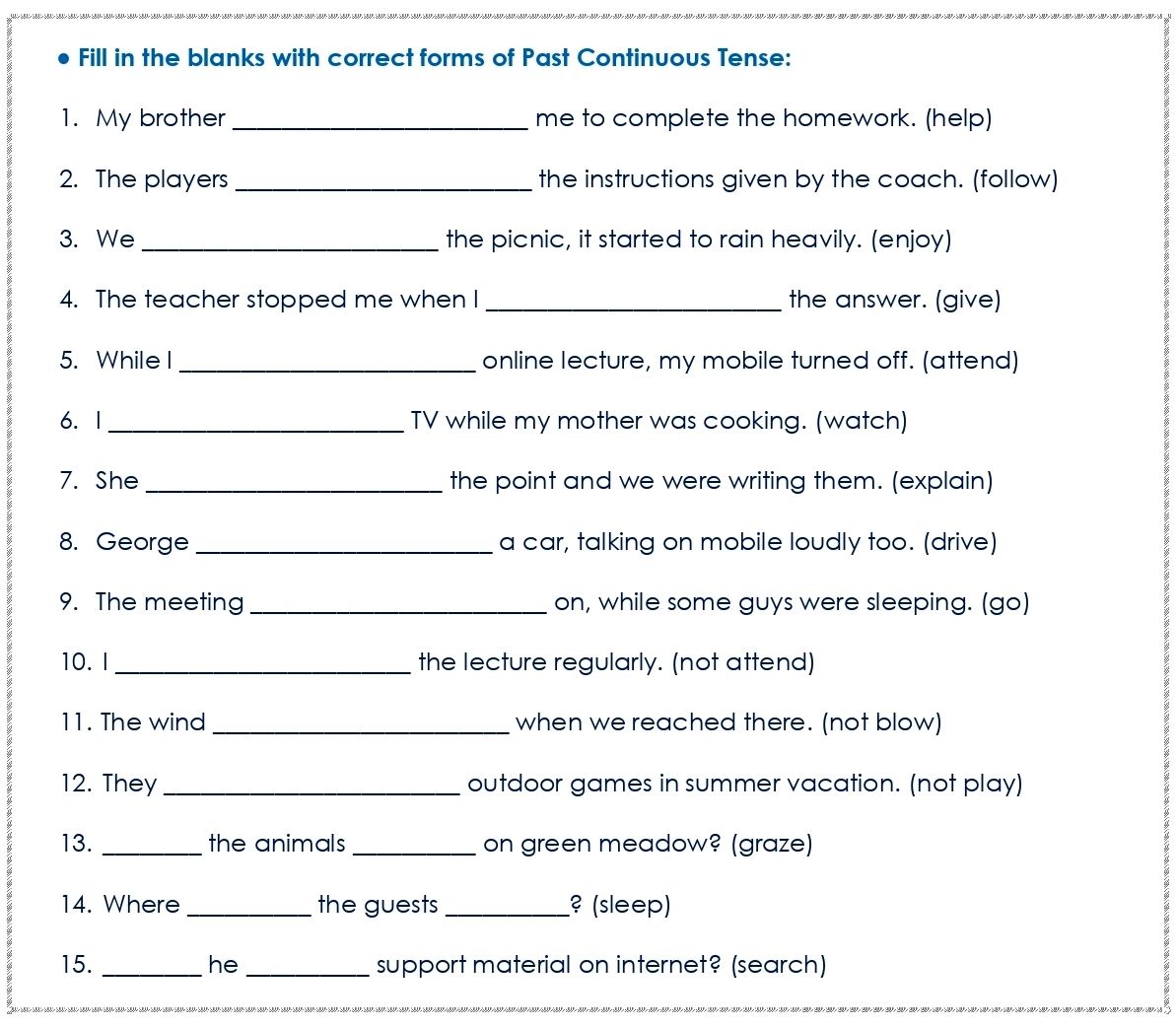
2. Uses of Continuous Past Tense
[sub+was/were+main verb (ing)]
a. TO EXPRESS ONGOING PAST ACTION
- My brother was helping me to complete the homework.
- It was raining yesterday evening.
- We were playing basketball on our school grounds.
- The students were asking questions to the teacher.
- I was singing a song at a birthday party.
b. TO EXPRESS INTERRUPTED PAST ACTIONS
- I was praying to God when my friend called.
- We were enjoying the picnic, it started to rain heavily.
- The teacher stopped me when I was answering.
- While I was attending an online lecture, my mobile turned off.
- The players were practicing, and suddenly the rain started.
c. TO EXPRESS PARALLEL ACTIONS
- I was watching TV while my mother was cooking.
- She was explaining the point, and we were writing it.
- We were having dinner, also discussing COVID-19.
- George was driving a car, talking on the mobile loudly too.
- The meeting was going on, while some guys were sleeping.
d. IN NEGATIVE SENTENCES
- I was not attending the lecture regularly.
- They were not playing during summer vacation.
- You were not talking with your friend.
- The teacher was not explaining the point.
- The wind was not blowing when we reached there.
e. IN QUESTIONS
- Were we talking loudly yesterday?
- Was he attending a Physics lecture?
- Were the animals gazing on a green meadow?
- Where were the guests sleeping?
- What was your English teacher telling?
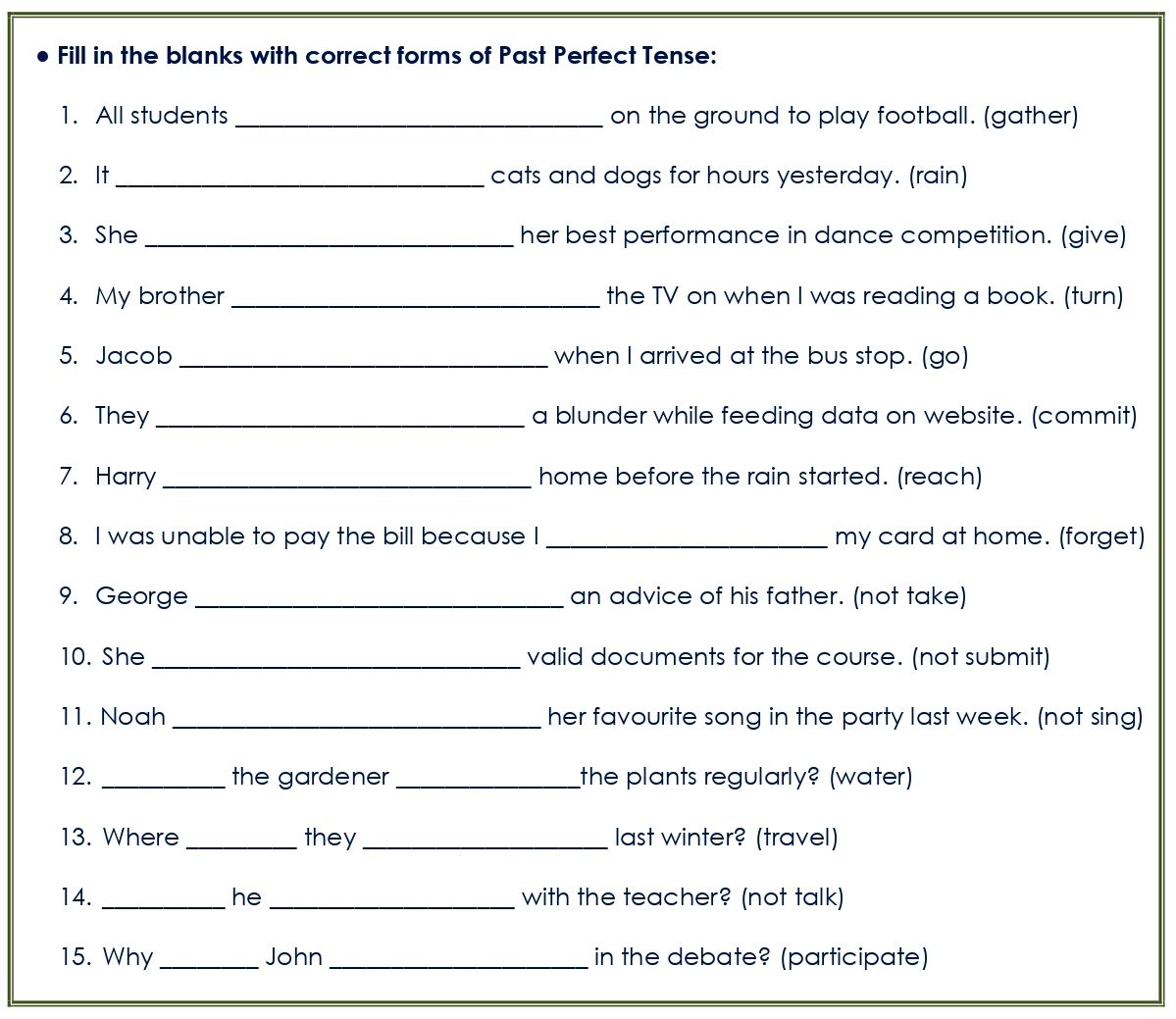
3. Uses of Perfect Past Tense
[sub+had+main verb (past participle)]
a. TO EXPRESS ONE EVENT HAPPENED BEFORE ANOTHER
- Jacob had gone out when I arrived in the shop.
- I had saved my data before the computer turned off.
- Harry had reached home before the rain started.
- I could not pay the bill because I had lost my purse.
b. TO EXPRESS THE ACTION STARTED AND FINISHED IN THE PAST
- Emily had gone to deposit money in the bank.
- She had planted rose plants given by her husband.
- All students had gathered on the ground.
- They had taken the right decision.
c. TO EXPRESS THE USE OF ‘JUST.’
- The train had just left when we arrived at the station.
- He had just reached home before he heard the bad news.
- The teacher had just finished the topic before the bell rang.
- I stopped the car when the engine had just locked.
d. IN NEGATIVE SENTENCES
- She had not submitted valid documents.
- All students had not participated in the competition.
- Noah had not sung her favourite song.
- I hadn’t faced any difficulty in the final exam.
e. IN QUESTIONS
- Had your brother applied for that post?
- Had they reached the airport in time?
- Had Henry told an interesting story?
- Hadn’t they taken your guidance last year?
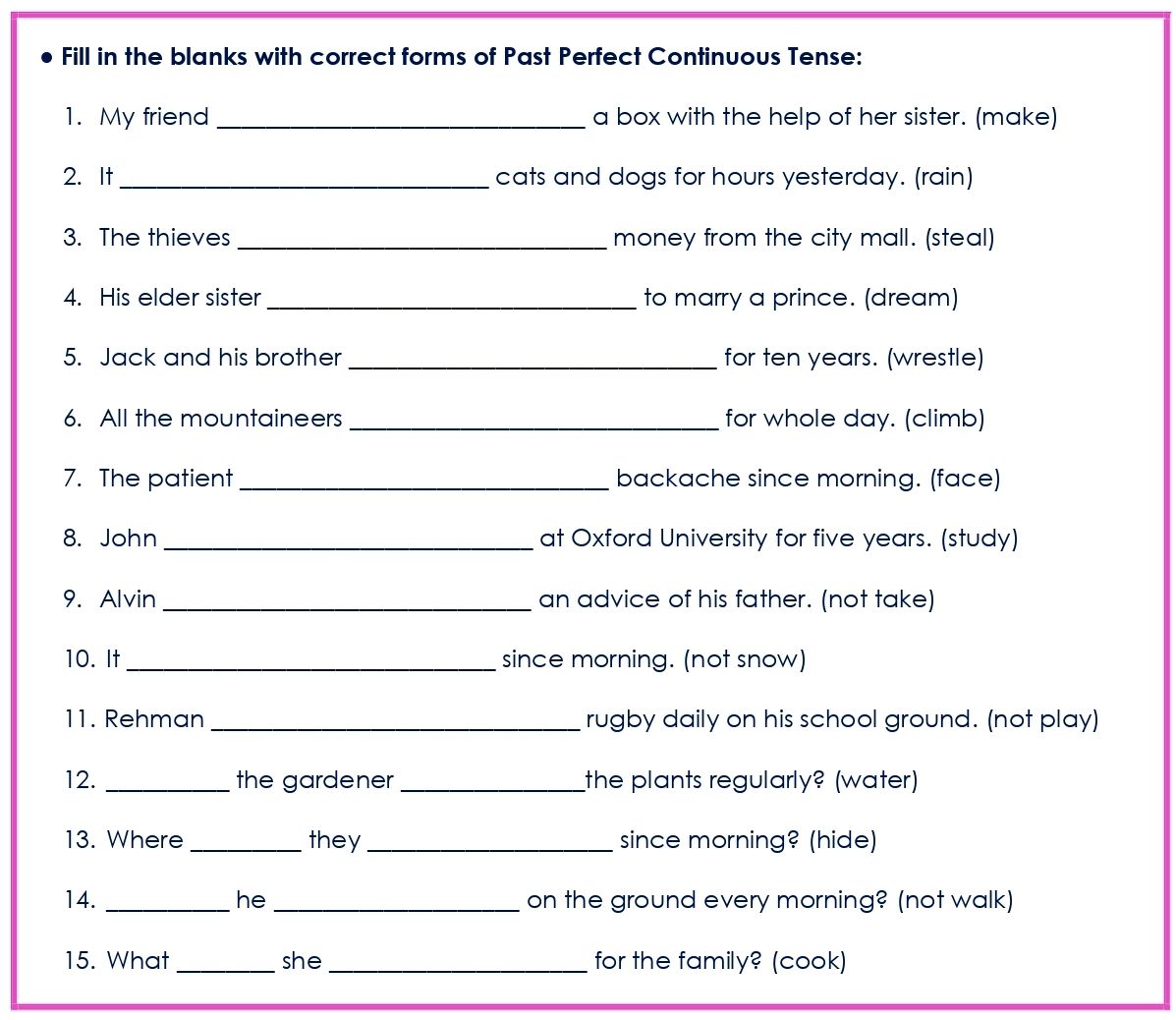
4. Uses of Perfect Continuous Past Tense
[sub+had been+main verb (ing)]
a. TO EXPRESS THE ACTION STARTED IN THE PAST, REMAINED CONTINUOUS IN THE PAST, AND FINISHED IN THE PAST
- I had been going to college.
- He had been making a box with the help of his sister.
- All players had been playing with confidence.
- William had been counting the coins.
b. TO EXPRESS PARTICULAR DURATION IN PAST
- He had been studying there for five years.
- Yogesh had been standing in the queue for the whole day.
- Ahmed had been waiting for three hours.
- The patient had been facing a backache since morning.
c. IN NEGATIVE SENTENCES
- Alvin had not been taking the advice of his father.
- It had not been snowing since morning.
- The teacher had not been talking unnecessarily.
- Rehman had not been playing rugby daily.
d. IN QUESTIONS
- Had she been trying to save the dog?
- Had the gardener been watering the plants regularly?
- Had the doctor been practicing for ten years?
- Had the birds been singing at night?
5. Uses of Simple Present Tense
[sub+main verb/main verb (s,-s)]
a. TO EXPRESS HABITS AND ROUTINES
- Charles goes to the gym every morning.
- I drink coffee every morning.
- Julie gets up early in the morning.
- They watch football matches regularly.
- Students often visit grammar websites.
b. TO EXPRESS GENERAL/UNIVERSAL TRUTH
- The Earth moves around the sun.
- Water boils at 100 degrees C.
- A magnet attracts iron.
- Plants need soil and water to live.
- The sun rises in the East and sets in the West.
c. TO EXPRESS FUTURE ACTION
- My friend arrives in Paris next Wednesday.
- The restaurants open at 8.00 tonight.
- The plane lands in ten minutes.
- Our final exam starts the day after tomorrow.
d. IN NEGATIVE SENTENCES
- They do not know my phone number.
- Javed doesn’t like to study Chemistry.
- Many teachers don’t use a laptop while teaching.
- Edwin does not use a dictionary while studying.
e. IN QUESTIONS
- Do you know the writer of the novel?
- Don’t they live in Tokyo now?
- Does Miller speak Spanish well?
- Doesn’t he play a semi-final today?
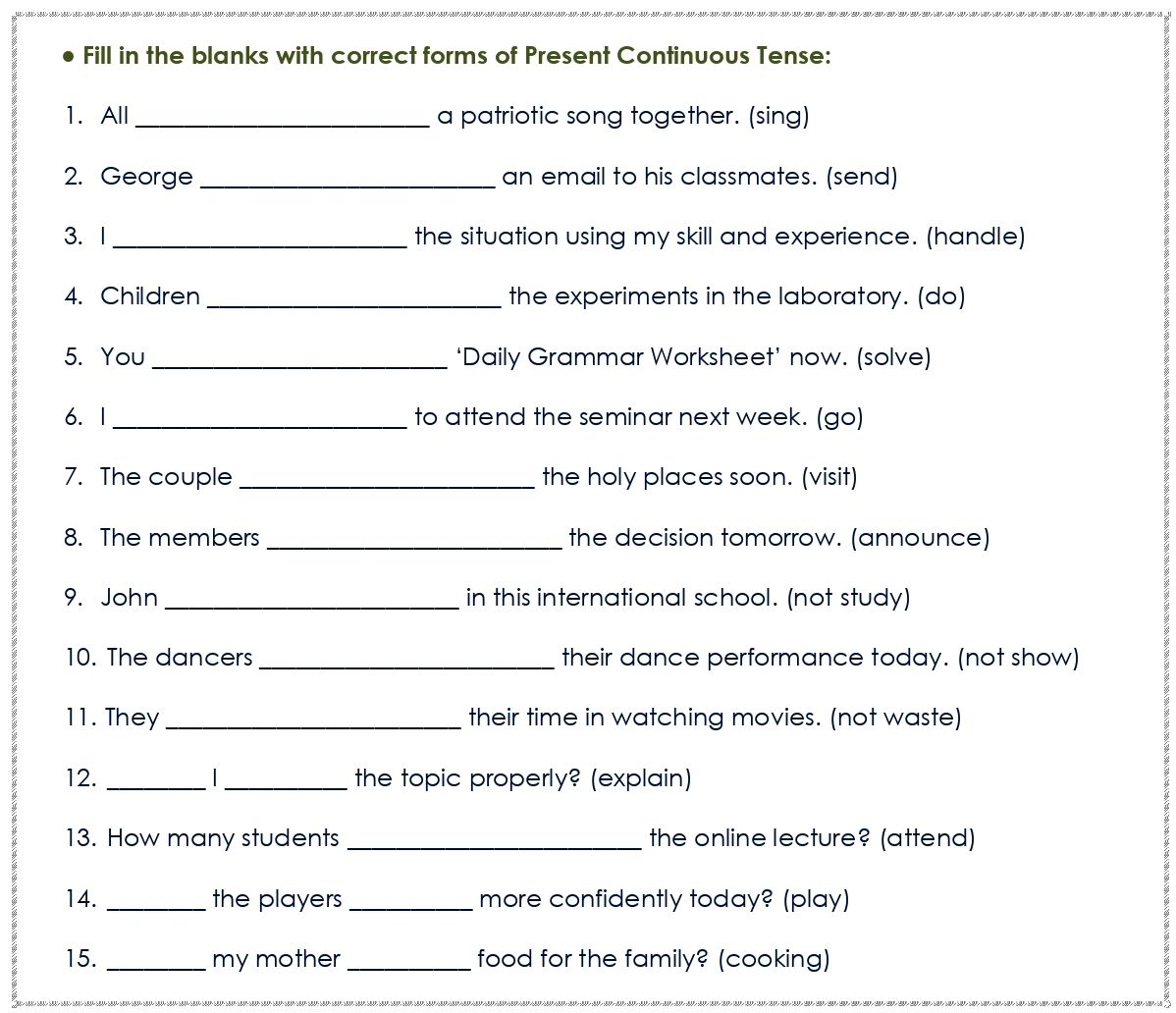
6. Uses of Continuous Present Tense
[sub+am/is/are+main verb (ing)]
a. TO EXPRESS ONGOING ACTION
- All are singing a patriotic song together.
- I’m helping the victims of KOVID-19.
- Smith is writing a letter to his friend.
- You are learning English grammar now.
- It is raining heavily outside.
b. TO EXPRESS FUTURE PLAN
- I am going to teach the lesson tomorrow.
- The couple is visiting the holy places next year.
- The guests are arriving at 9 o’clock.
- They are launching a new car soon.
- The minister is announcing the decision tomorrow.
c. IN NEGATIVE SENTENCES
- Lawson is not studying at this school.
- Girls are not playing badminton.
- I am not showing my dance performance today.
- It is not happening as we wish.
- Visitors are avoiding entering the cave.
d. IN QUESTIONS
- Am I explaining the topic properly?
- Aren’t they studying in the reading hall?
- Isn’t Ralph arriving today?
- Where is your father working?
- How many students are attending the online lecture?
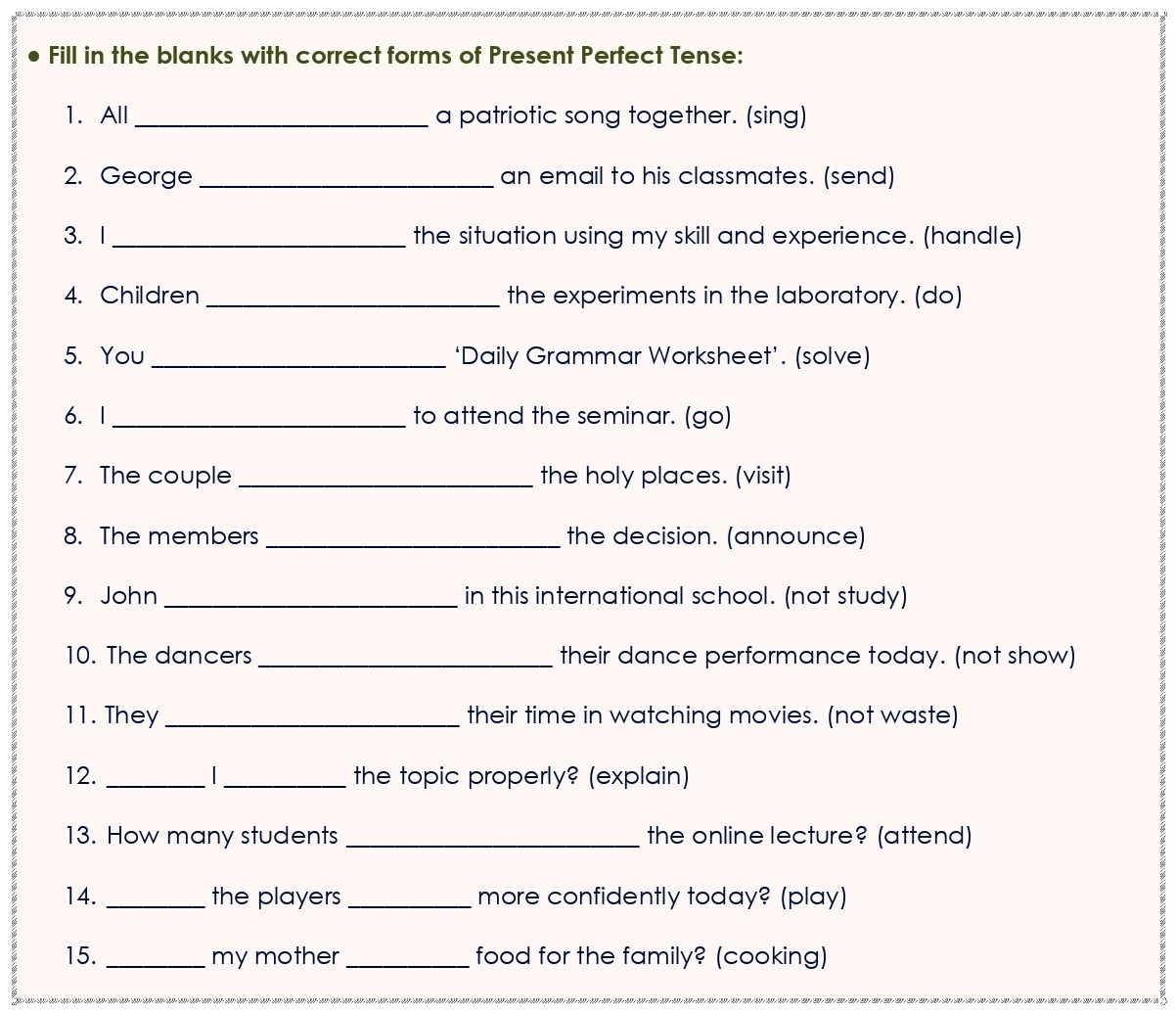
7. Uses of Perfect Present Tense
[sub+have/has+main verb (past participle)]
a. TO EXPRESS RECENTLY FINISHED ACTION
- They have played football on the school ground.
- She has traveled to some European countries.
- Ralph has learned how to read.
- All students have participated in the competition.
- have taken a lunch in a restaurant.
b. TO EXPRESS THE ACTION STARTED IN PAST AND CONTINUES IN PRESENT
- Robert has lived in Canada for ten years.
- She has worked in the office since 2001.
- I have lived in the UK since 1989.
- We have played the guitar for 20 years.
c. TO EXPRESS REPEATED ACTION BETWEEN PAST AND PRESENT
- People have seen the movie ‘Jurassic Park’ many times.
- We have gone to the beach many times.
d. IN NEGATIVE SENTENCES
- The officer has not granted permission to visit US.
- They haven’t finished the homework yet.
- George has not removed the data from his PC.
- I haven’t taken a risk to drive in a storm.
e. IN QUESTIONS
- Has she worked as a salesperson before?
- Where have I left my mobile?
- Have you visited any language websites?
- Haven’t you started to write a blog yet?
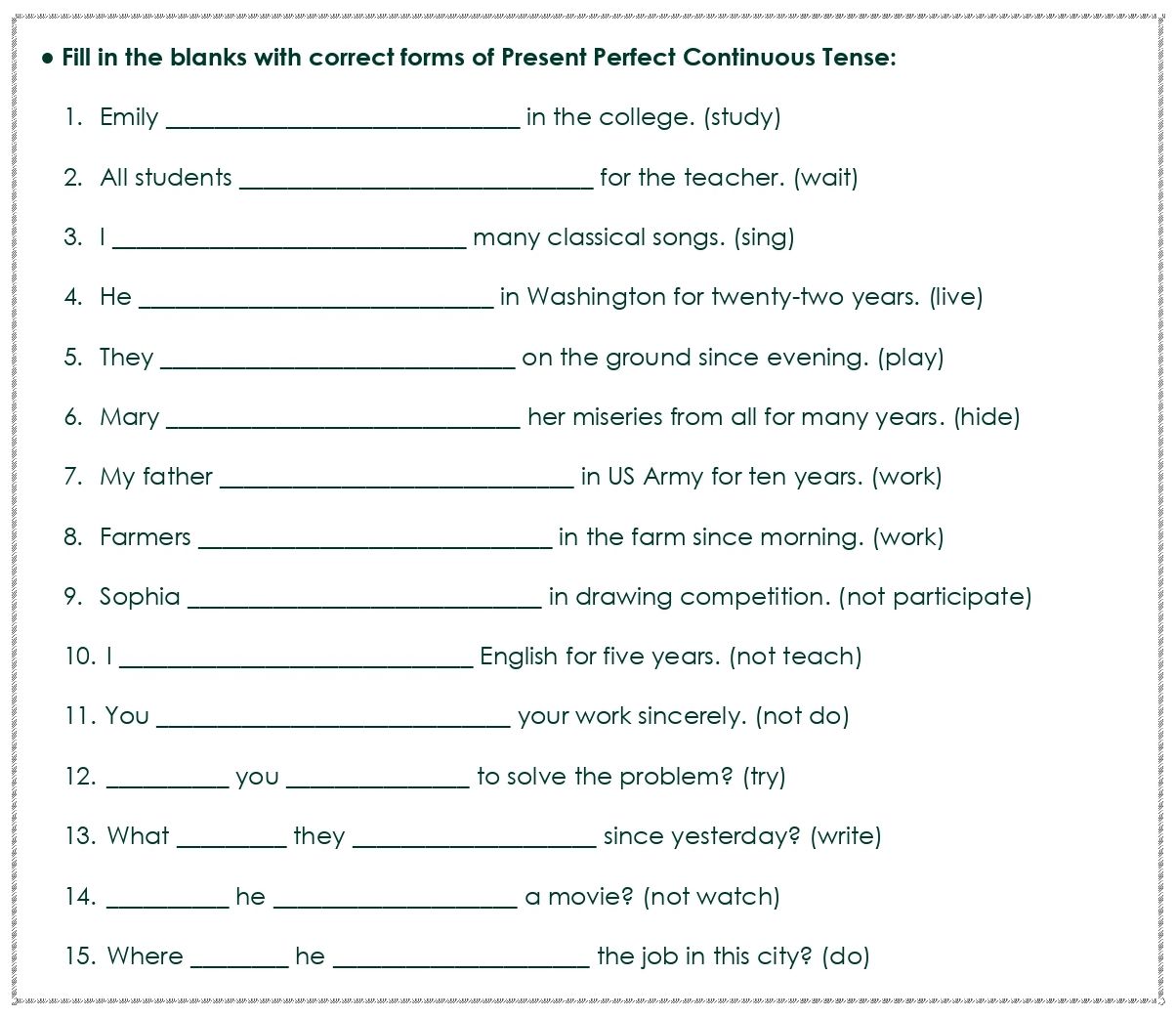
8. Uses of Perfect Continuous Present Tense
[sub+have/has been+main verb (ing)]
a. TO EXPRESS THE ACTION STARTED IN PAST, CONTINUE IN PRESENT, AND MAY CONTINUE IN FUTURE
- Emily has been studying in college.
- We have been playing on the ground.
- All students have been waiting for the teacher.
- I have been singing many classical songs.
b. TO EXPRESS DURATION FROM PAST TO PRESENT
- He has been living in Washington for twenty-two years.
- My father has been working in US Army for ten years.
- Farmers have been working on the farm since morning.
- I have been visiting Dubai since 2010.
c. IN NEGATIVE SENTENCES
- You have not been doing your work sincerely.
- Sophia has not been participating in the drawing competition.
- I have not been teaching English for five years.
- The dog has not been barking at the owner.
d. IN QUESTIONS
- Have you been trying to solve the problem?
- Hasn’t he been watching a movie?
- What have you been writing since yesterday?
- Where has he been working in the city?
9. Uses of Simple Future Tense
[sub+shall/will+main verb]
a. TO EXPRESS FUTURE ACTIONS
- I shall go to Yorkshire next week.
- The teacher will teach English Tenses tomorrow.
- They will come to meet me on Wednesday.
- The minister will declare the Annual Budget soon.
b. TO PREDICT FUTURE EVENTS
- It will rain heavily tomorrow.
- Brazil will surely win the football final.
- The train will arrive two hours late.
- The PM will talk about the current crisis.
c. TO EXPRESS WILLINGNESS
- Tony will help his friend to write a blog on the internet.
- Mrunal will give a public speech on Monday.
- My mother will deposit $50 in the Relief Fund.
- All teachers will participate in the blood-donation camp.
d. IN NEGATIVE SENTENCES
- They will not listen to the songs on the radio.
- I won’t leave my seat until I get a written order.
- Rosie will not help you in this situation.
- He will not waste his time talking on the phone.
e. IN QUESTIONS
- Shall we go to the cinema tomorrow?
- Will you come with me to collect the papers?
- Won’t they visit the monuments now?
- Will the students attend today’s online meeting?
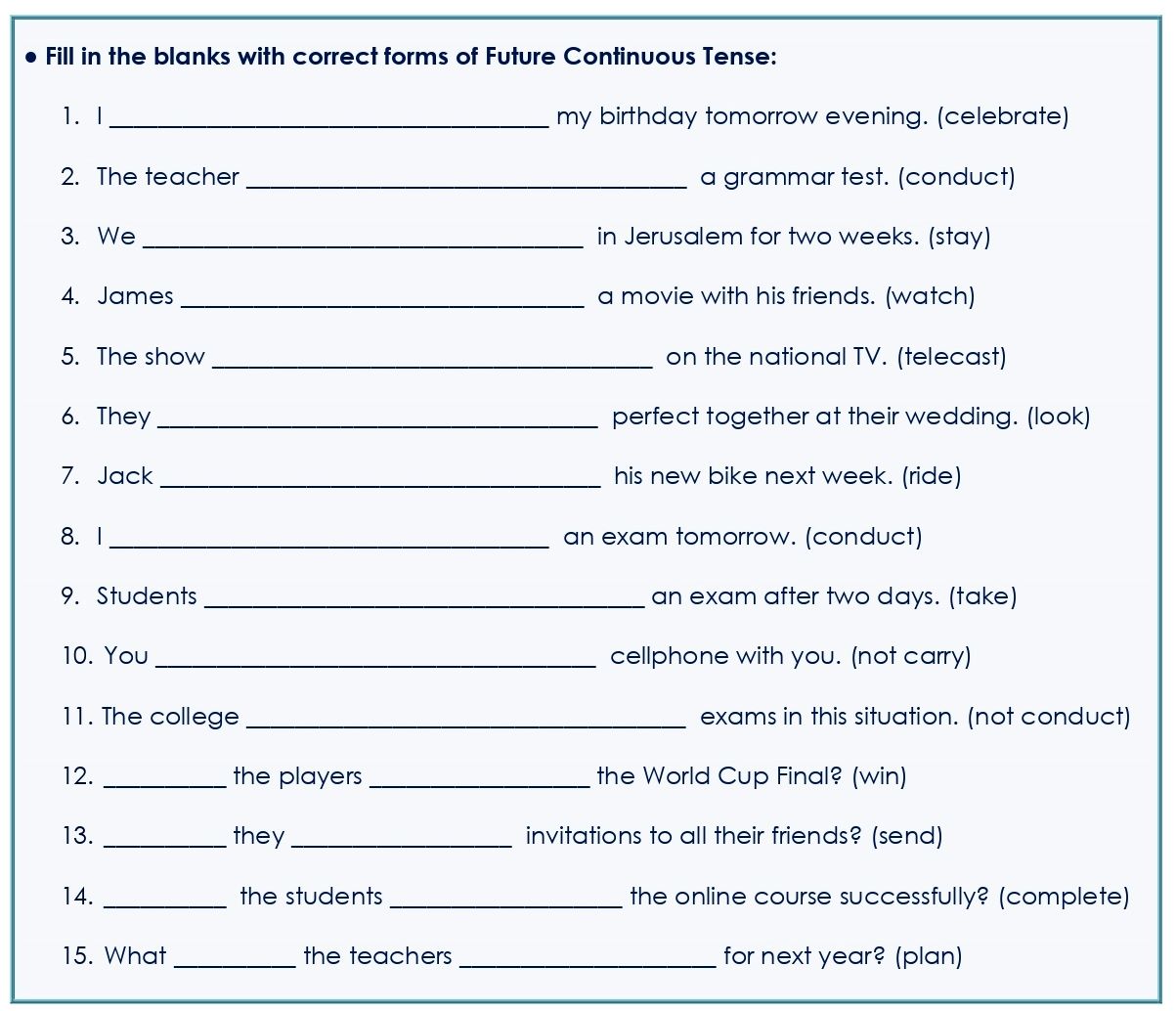
10. Uses of Continuous Future Tense
[sub+shall/will+be+main verb (ing)]
a. TO EXPRESS PROGRESSIVE FUTURE EVENTS
- She will be singing a beautiful song.
- They will be waiting at the bus stop.
- I’ll be celebrating my birthday tomorrow evening.
- The teacher will be conducting a grammar test.
b. TO EXPRESS PLANNED FUTURE ACTION
- We shall be staying in Jerusalem for two weeks.
- They will be coming together in December.
- Imran will be presenting a slide show about Animals.
- At 6 o’clock, we will be practicing a drama.
c. IN NEGATIVE SENTENCES
- You will not be carrying a cellphone with you.
- Villagers won’t be staying there for a long time.
- The college will not be conducting exams in this situation.
- They won’t be reading my messages anymore.
d. IN QUESTIONS
- Will he be studying in our college library?
- Will they be talking with the experts this afternoon?
- What songs will Stanley be singing in concert?
- Where will they be staying together?
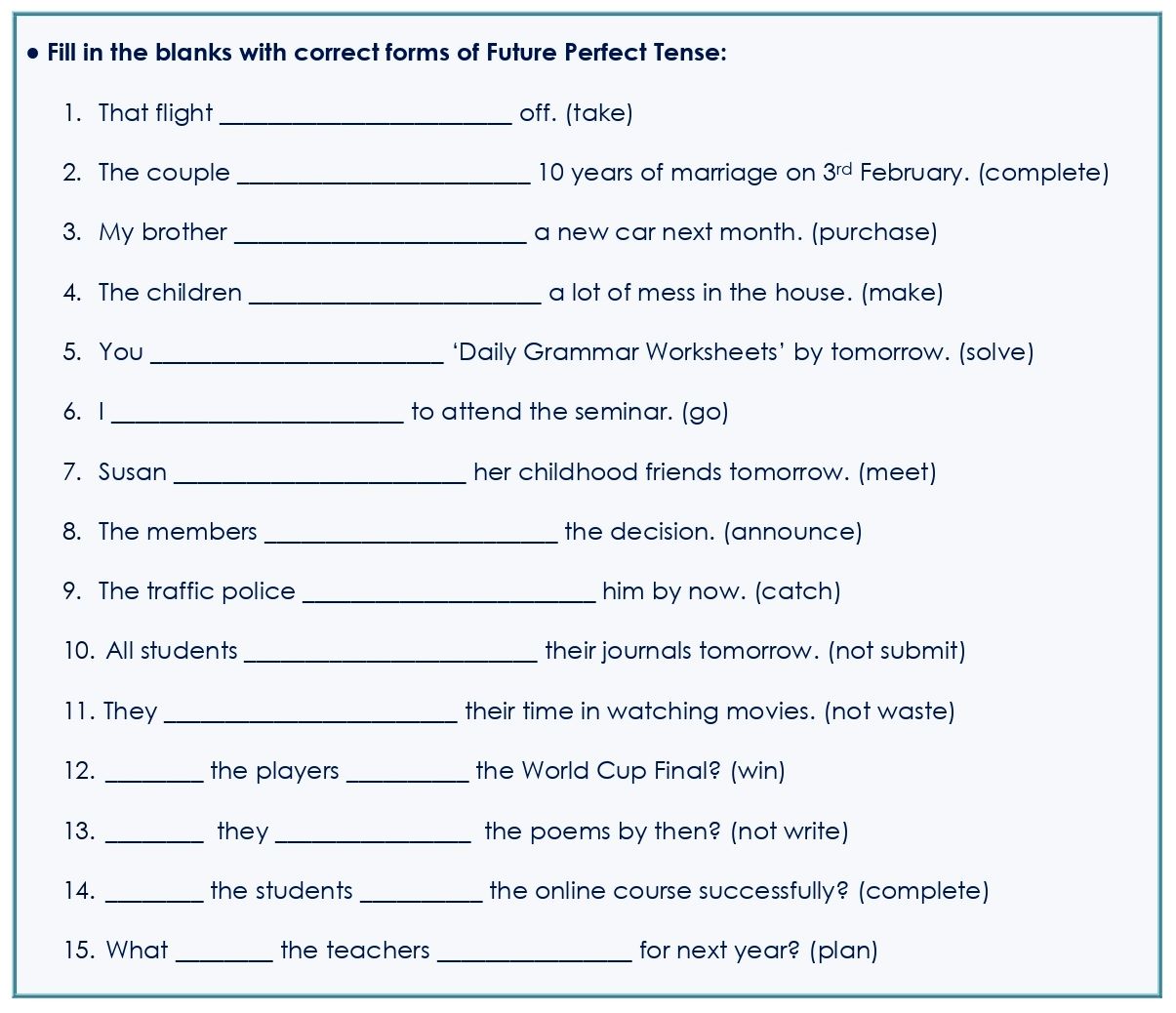
11. Uses of Perfect Future Tense
[sub+shall/will+have+main verb (past participle)]
a. TO EXPRESS COMPLETED FUTURE ACTION
- I shall have gone to Paris with my classmates.
- The players will have won the match.
- They will have reached the airport by 11 o’clock.
- Dexter will have sent an email before you reach.
- It will have stopped raining.
b. IN NEGATIVE SENTENCES
- We shall not have booked the railway tickets.
- They will not have distributed the papers.
- Arthur won’t have shifted his luggage there.
- I shall not have painted the house.
- All students will not have submitted journals tomorrow.
c. IN QUESTIONS
- Shall we have completed the online course successfully?
- Will they have not written the poems by then?
- Won’t they have reserved all AC coaches?
- Will the players have won the World Cup Final?
- What will the teachers have planned for next year?
12. Uses of Perfect Continuous Future Tense
[sub+shall/will+have been+main verb (ing)]
a. TO EXPRESS THE ACTION WHICH WILL START IN FUTURE AND CONTINUE IN FUTURE
- I shall have been reading a novel.
- The family will have been living in Sydney.
- They will have been living in France for ten years.
- Our family will have been travelling all day.
- My father will have been driving our new car.
b. IN NEGATIVE SENTENCESS
- He will not have been watching TV for seven hours.
- Smith won’t have been studying much to pass the exam.
- Julie will not have been sleeping for five hours.
- I shall not have been staying there until you wish.
- The workers will not have been continuing the work.
c. IN QUESTIONS
- How long will you have been studying Chemistry?
- Will the English teacher have been teaching since morning?
- Will they have been travelling to Africa?
- Where will she have been studying after graduation?
- Will your mother have been cooking for the family?
Practice Worksheets