E-mail Writing in English: Format & Examples
E-mail means Electronic Mail, one of the most commonly used and popular services on the Internet. E-mail is an effective method of exchanging messages between people with the help of electronic devices. Email was invented by Ray Tomlinson in 1972. He developed the first system to send mail between users on different hosts across the ARPANET, using the @ sign to link the user name with a destination server. Later, the system was recognized as E-mail.
E-mail operation is primarily based on the availability of the Internet. Today’s email systems are based on a store-and-forward model. Email systematically accepts, forwards, delivers, and stores messages.
Dos and Don’ts for Email Etiquette:
Dos
- Have a clear subject line.
- Use a professional salutation.
- Recheck your e-mail.
- Keep private material confidential.
- Keep your email short and flawless. Stay concise.
- Check your attachments before sending.
- Include your name or a signature with additional details and contact information.
Don’ts
- Don’t forget your signature.
- Don’t use humour and sarcasm.
- Don’t assume the recipient knows what you are talking about.
- Don’t punctuate poorly.
- Don’t hit ‘Reply All’.
- Don’t think that anyone but the intended recipient will see your email. (No predictions)
- Don’t forward email without permission.
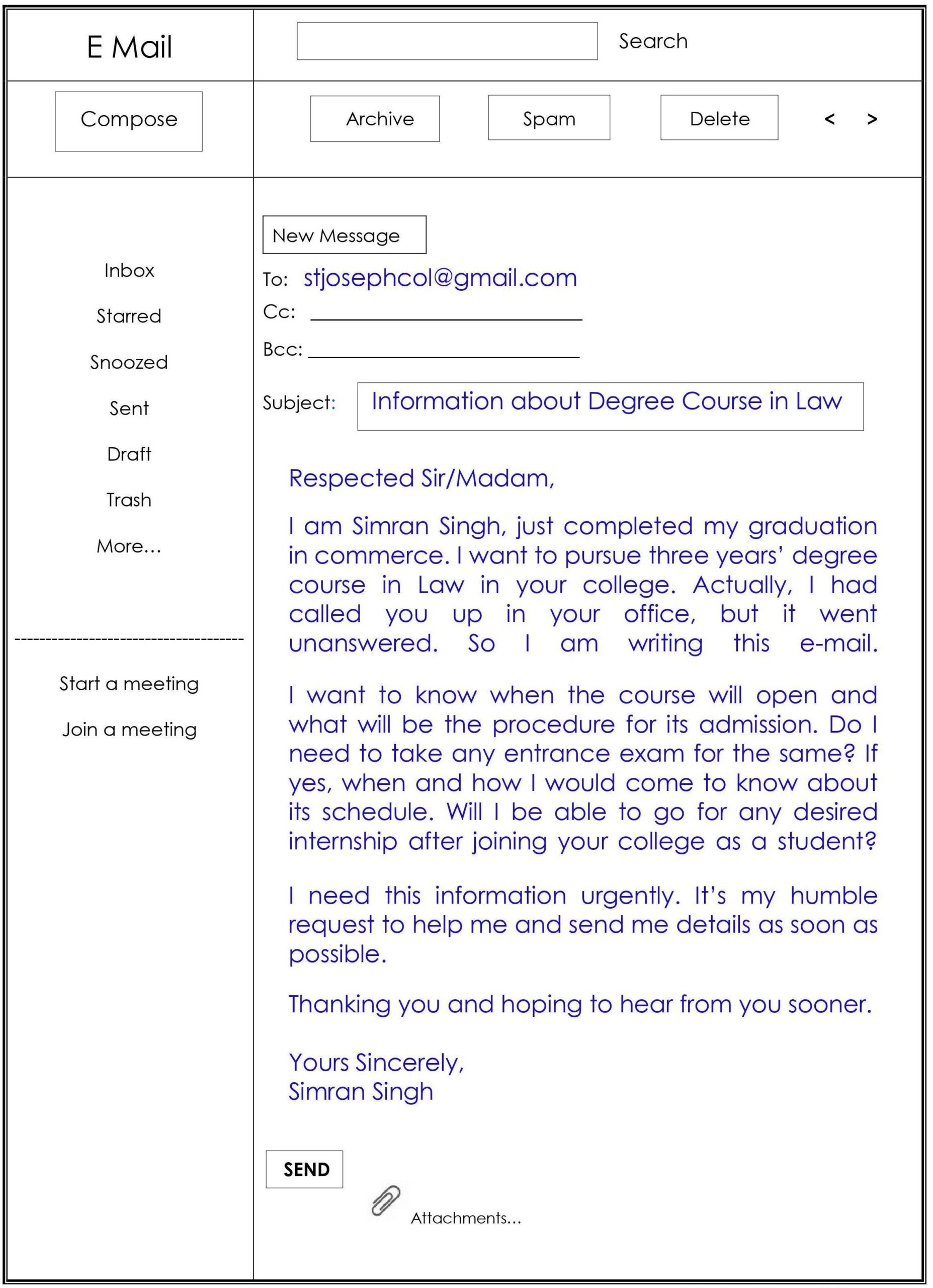
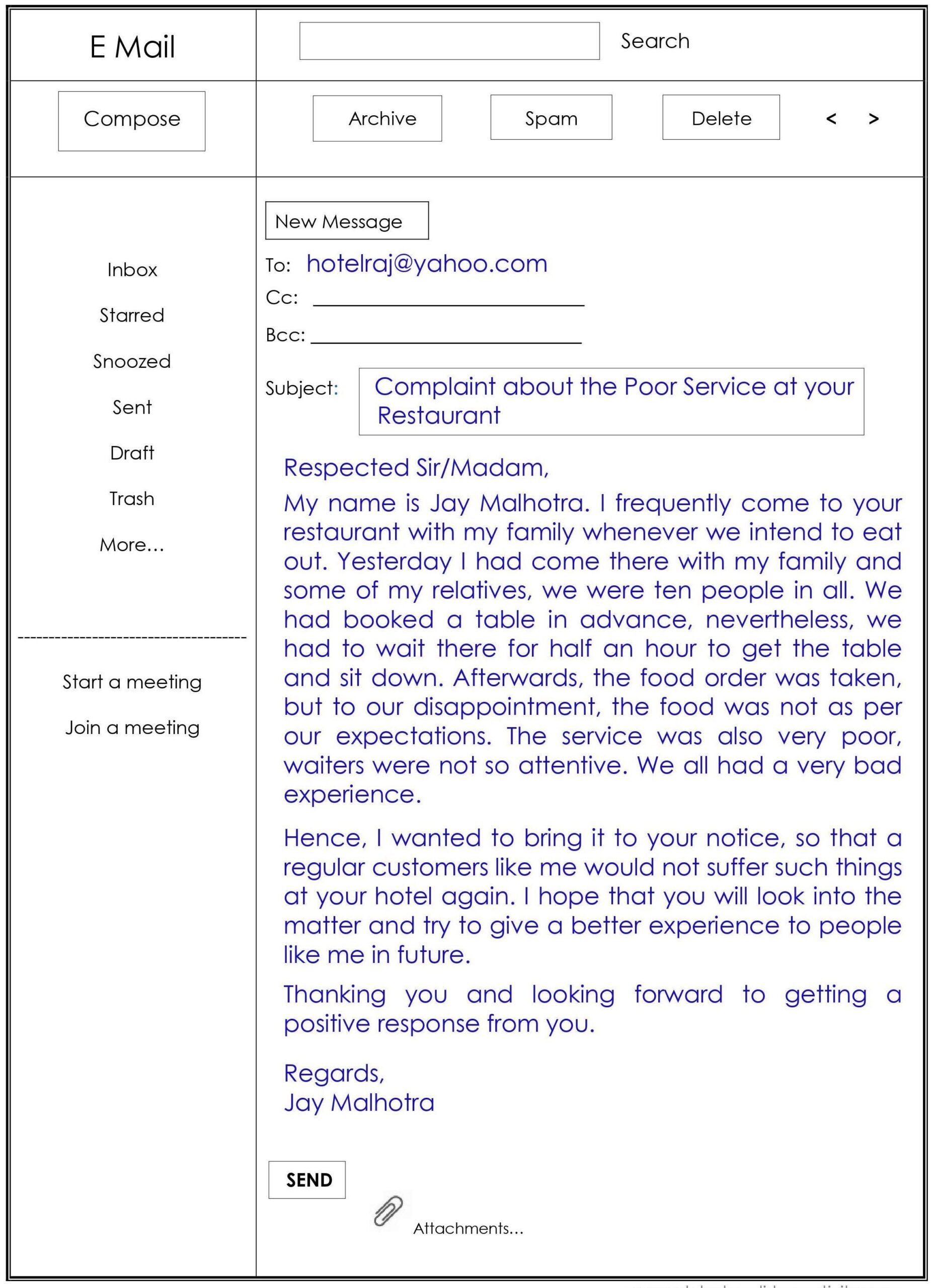
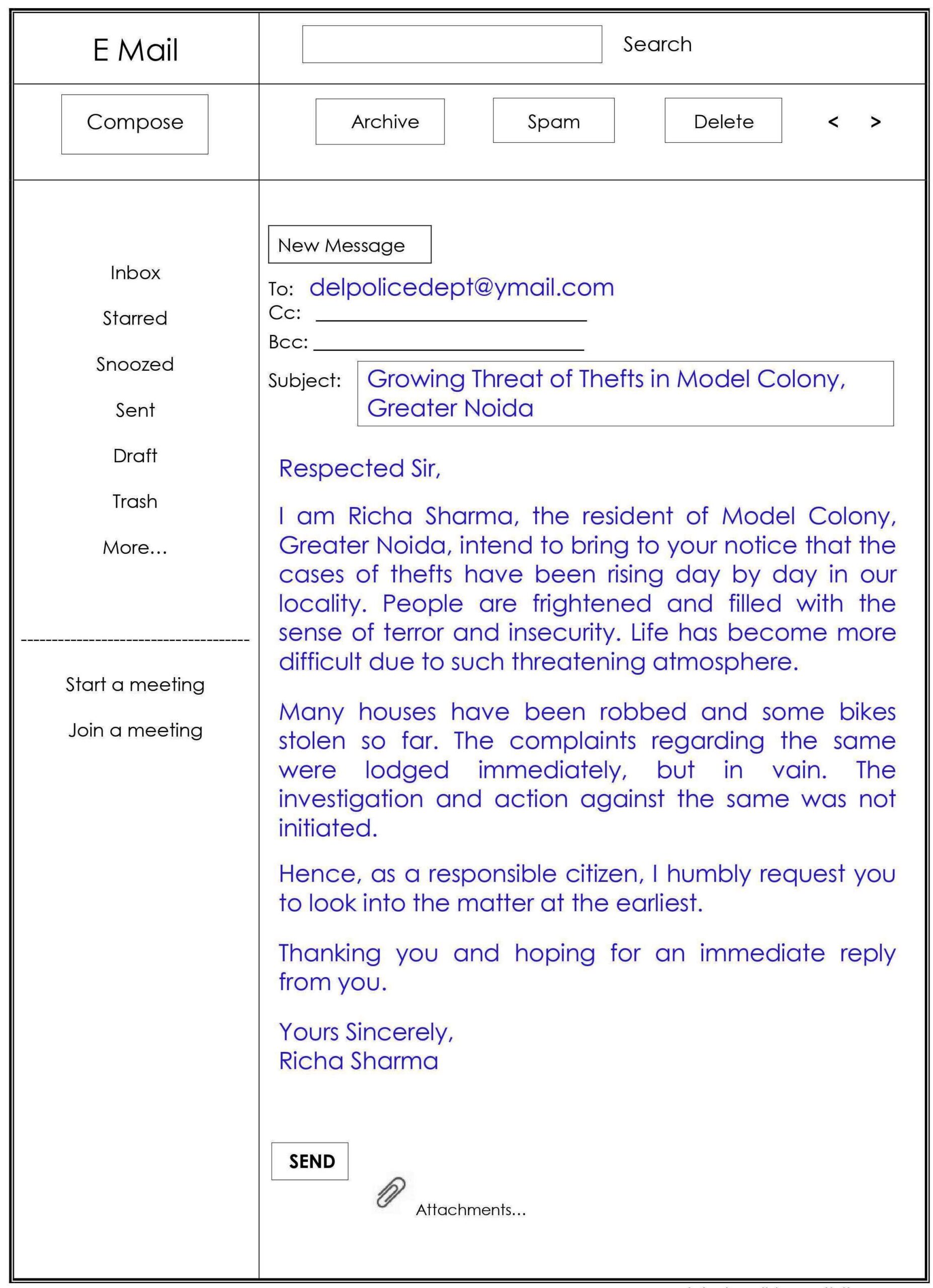
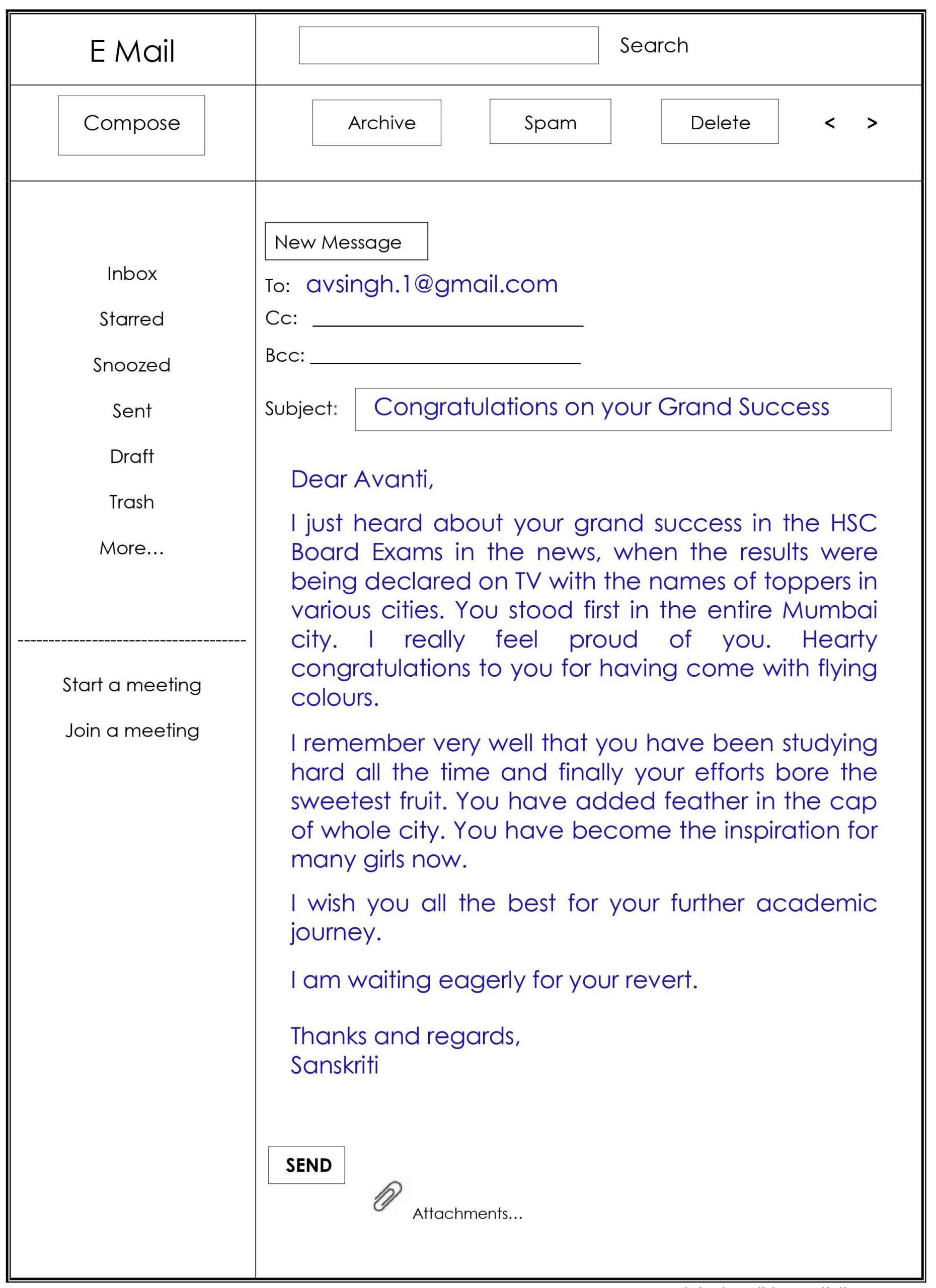
E-mail Format:
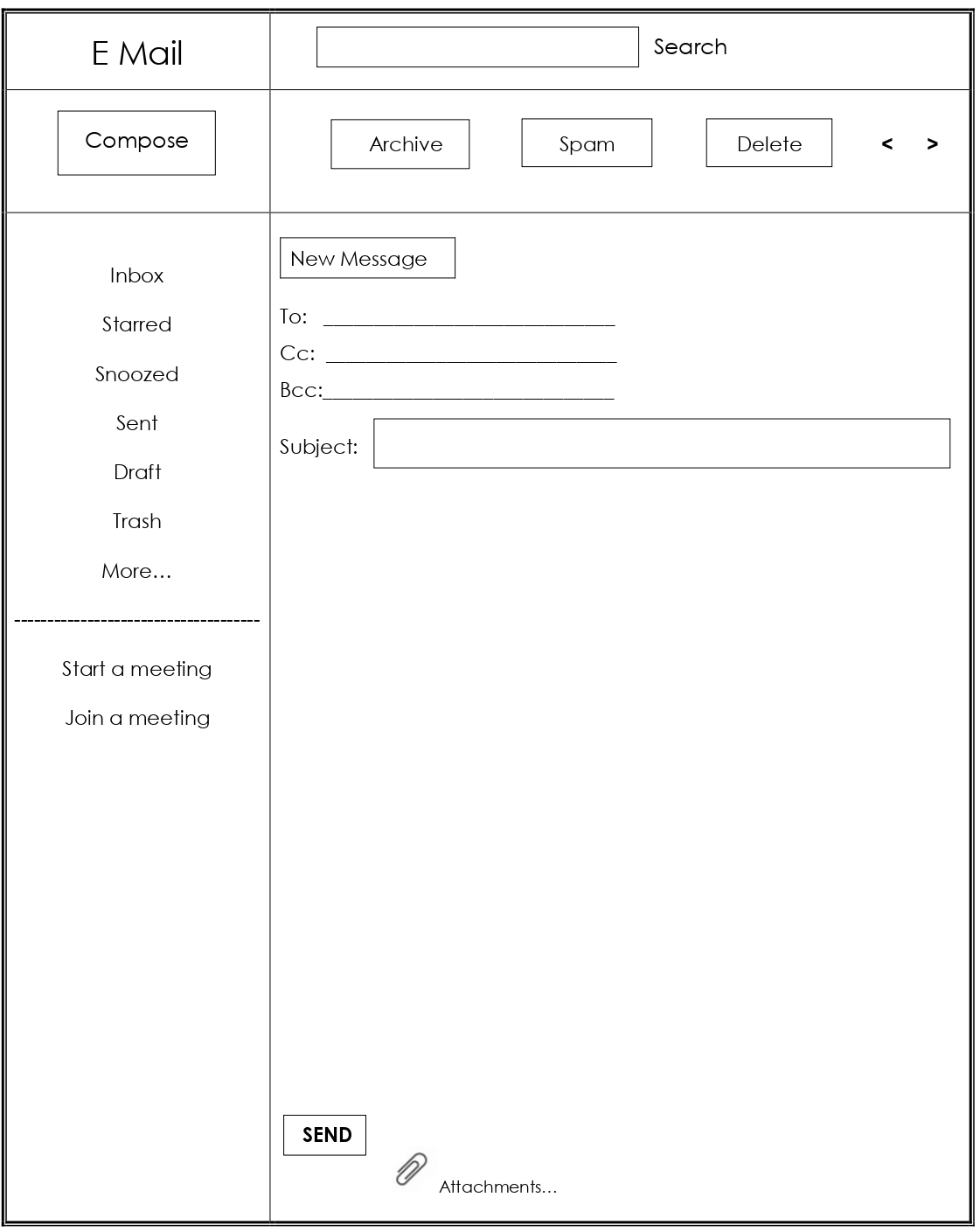 The carbon copy (CC) and blind carbon copy (BCC) tools are tricky. Sometimes they’re useful, but if used improperly, they can be problematic.
Examples: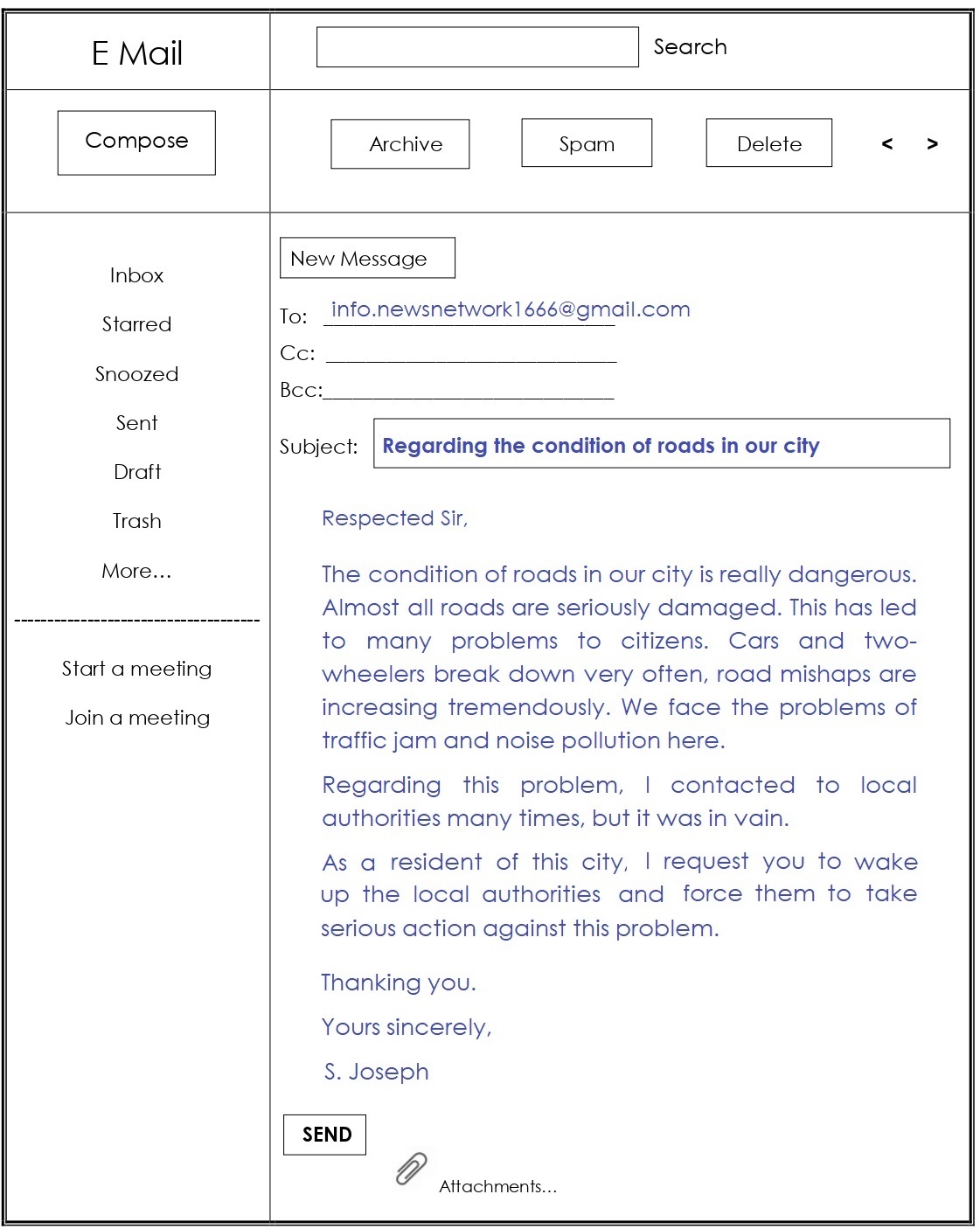
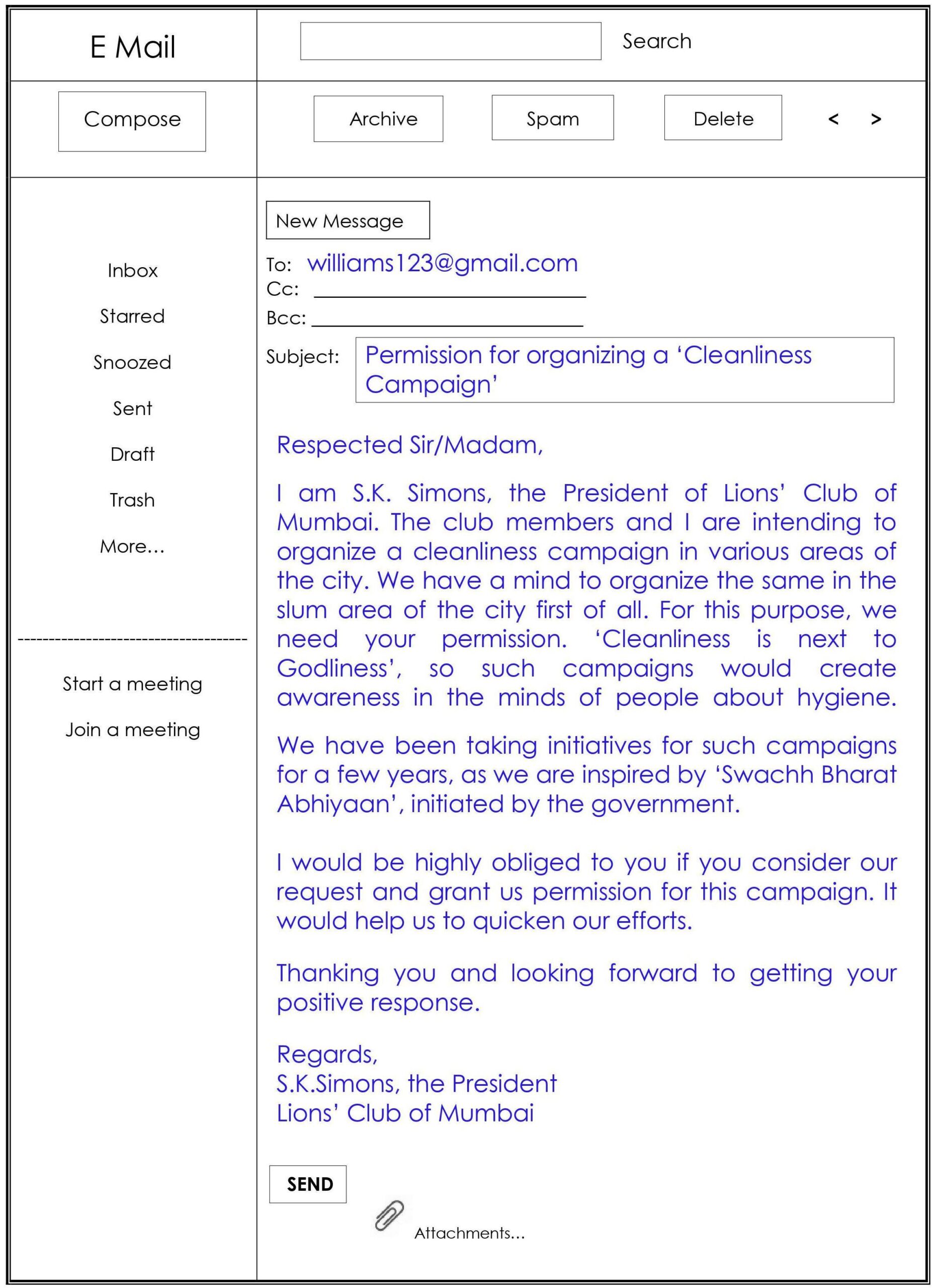
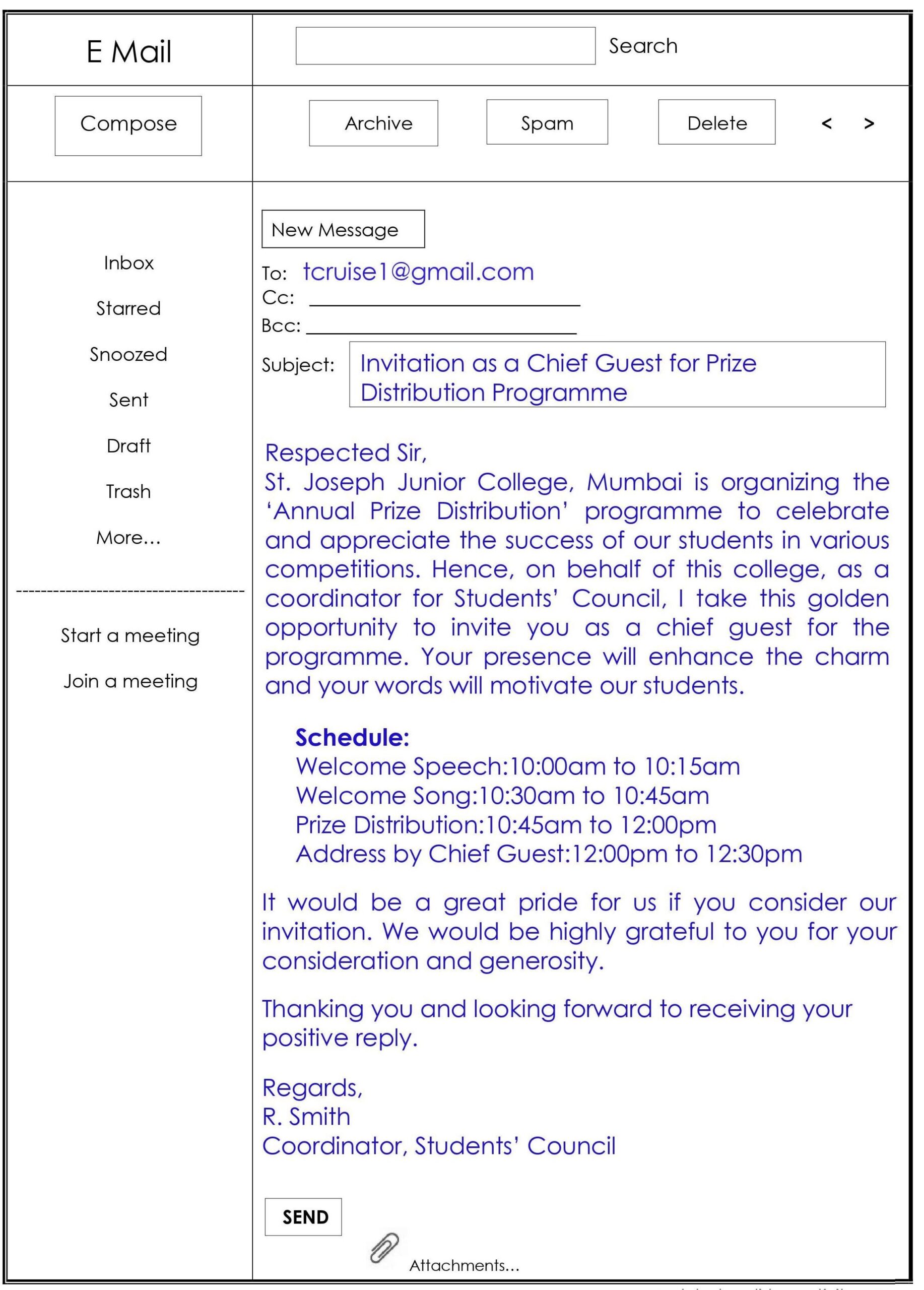
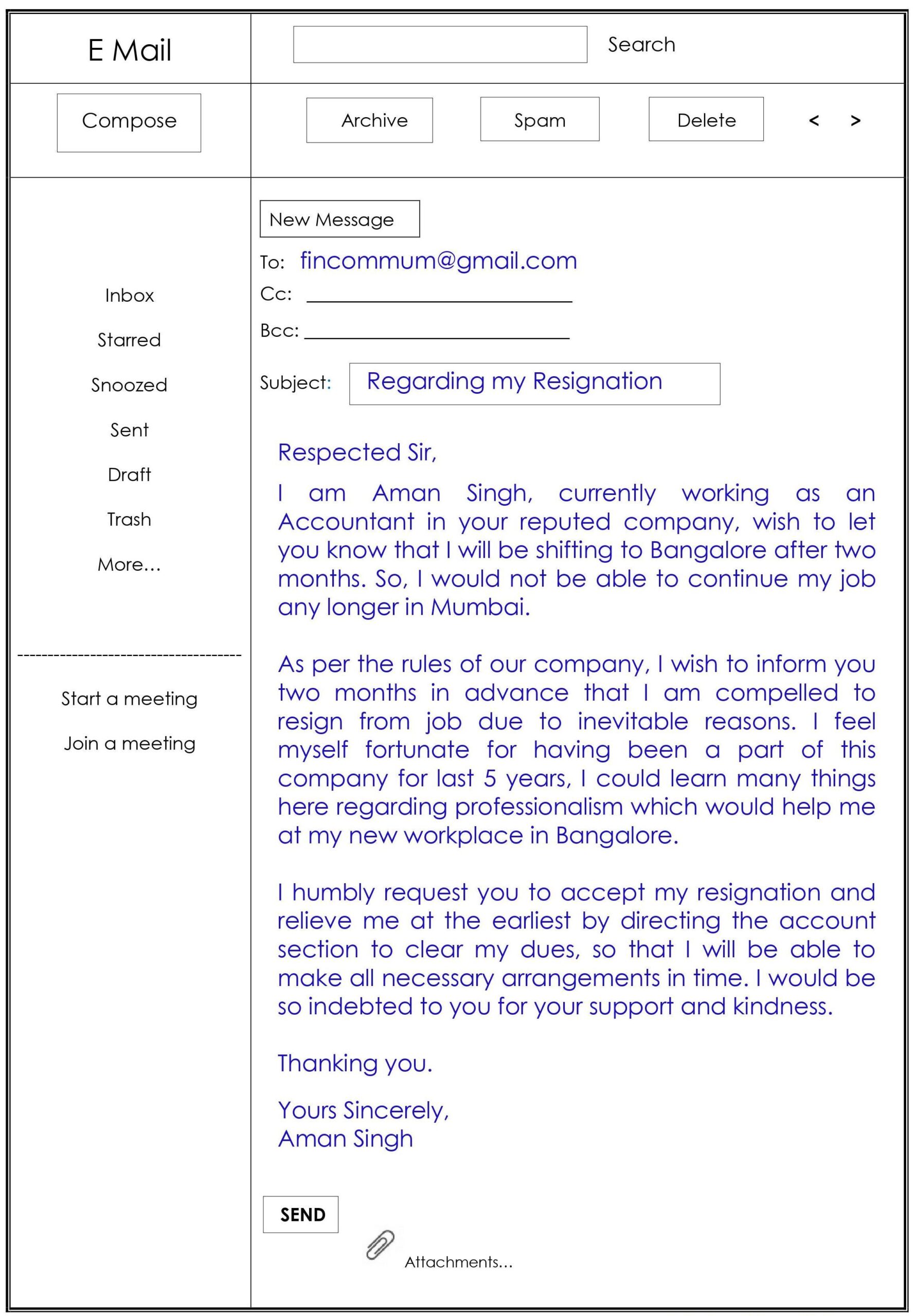
 More Examples will be added soon